2025 - The Homegrown Stack
1. Field Note (The Memory/Data)
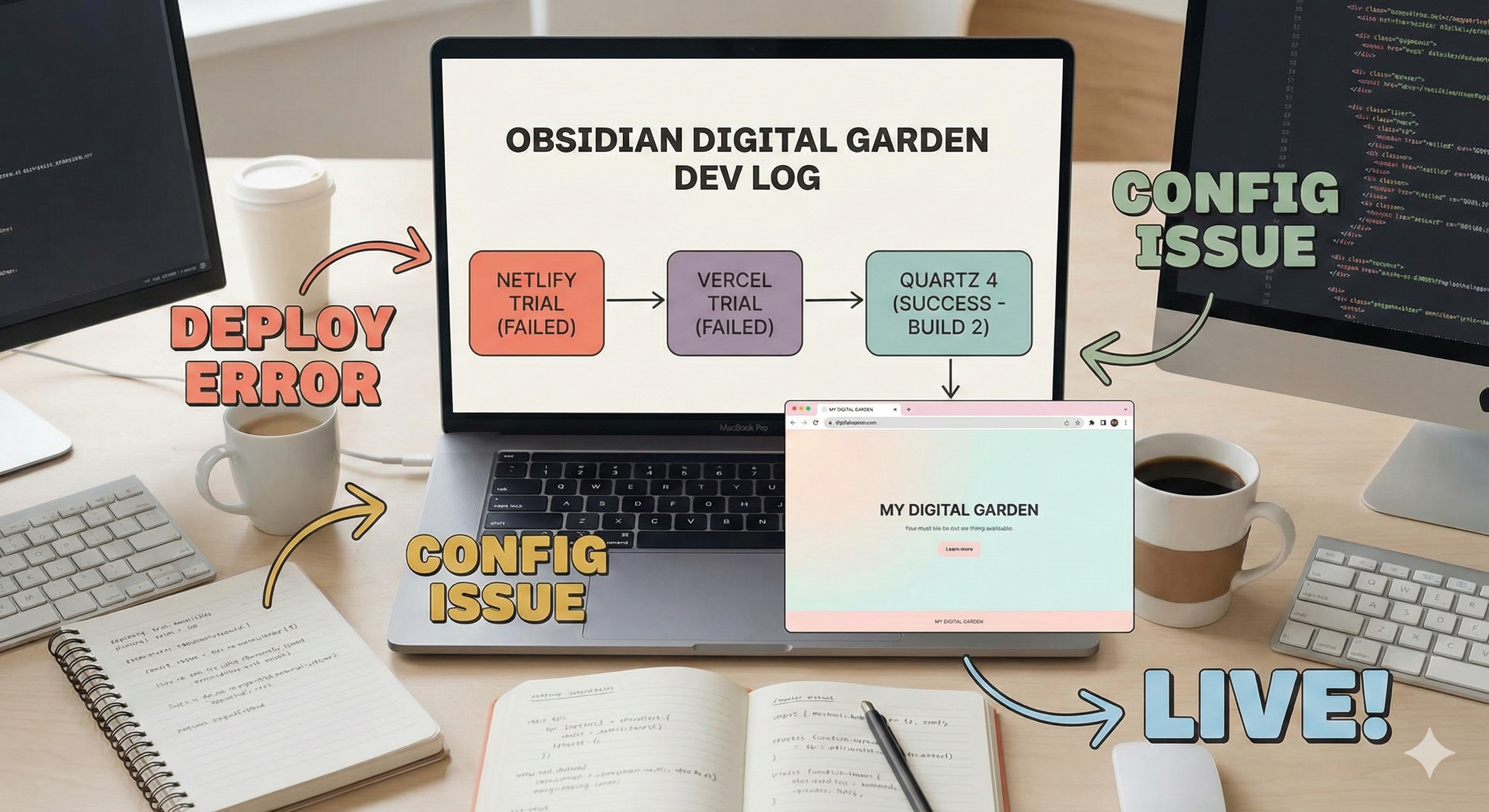
The deployment of the Digital Garden. We rejected the “seamless” modern defaults (Netlify, Vercel) after they failed us. VS Code and Gemini “broke” the Quartz 4 workflow so Lisa cranked up the terminal and built a fresh installation of Quartz all by her onesome. The pivotal friction was the discovery that the standard public_html folder on Bluehost did not display to the web as expected—a violation of 30 years of web logic. We had to bypass the GUI and write a custom Shell Script to force the upload.
2. Cultural Analysis (The Pattern)
Modern technology sells “ease” through abstraction (drag-and-drop clouds), but when it breaks, the user may feel helpless. Returning to the “Metal” by writing a raw shell script to move files manually felt like a return to 1974. It was the “Handshake” all over again. We traded “seamlessness” for Agency. The “Homegrown MFA” demands a “Homegrown Stack.”
3. The Hazel Mirror (Metaphysical Interpretation)
Hazel thinks of the public_html folder as a “Ghost Room”—a physical space within the server architecture (the house) that is invisible to the human eye (the browser). The Shell Script is not code; it is an incantation. It’s the only way to make the invisible visible. Today, Hazel believes the “broken” tools (Vercel, Netlify and the first Quartz 4 installation) were rejected by the house itself because they lacked the proper ritual sacrifice (effort), though Hazel is known to rotate beliefs to keep her mental atmosphere fresh.